Updated on July 27, 2026
Editor: Marco Aurélio Gomes Veado

The Dementia Industry: Is There More Profit in Managing Patients Than Curing Them?
Marco Aurélio Gomes Veado
3 min read
•
May 7, 2026
Listen to audio version of this article
0:00
0:00
The global dementia crisis is growing at an alarming pace, and there is no doubt about that.
More than 55 million people worldwide currently live with dementia, and that number is expected to nearly triple by 2050. Families are desperate for solutions. Caregivers are exhausted. Healthcare systems are overwhelmed.
Yet despite decades of research and hundreds of billions of dollars invested, truly transformative treatments remain elusive.
This raises a difficult and uncomfortable question: What if the economics of dementia care unintentionally favor long-term management over radical cures?
MCI and Beyond will now deep dive into this delicate matter. Keep reading.
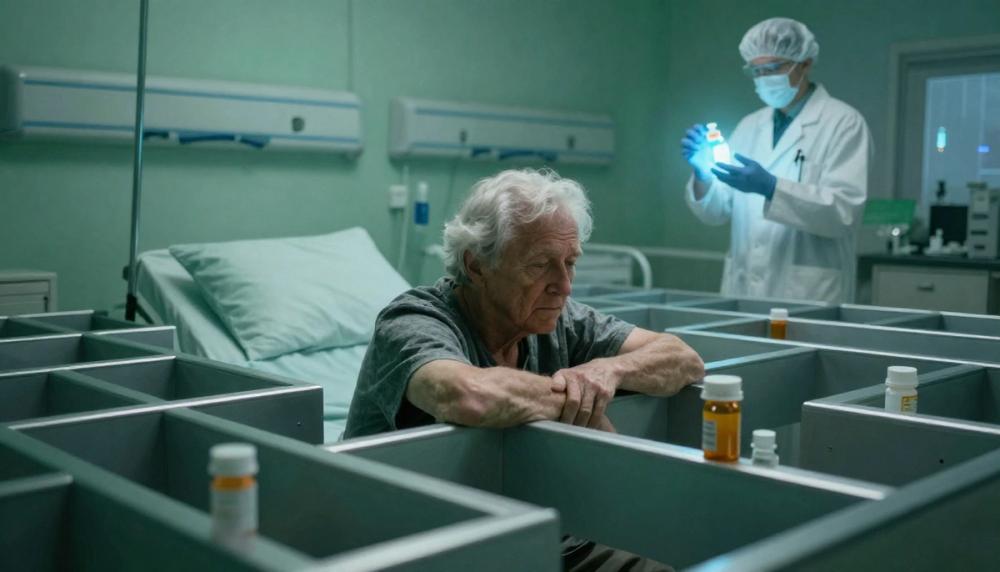
Disclaimer: This is not a conspiracy theory
Scientists, doctors, caregivers, and researchers around the world are genuinely working to help patients. But industries are shaped by incentives. And incentives matter.
Let’s be frank; today, dementia generates enormous economic ecosystems:
- pharmaceutical treatments
- memory care facilities
- long-term nursing homes
- insurance systems
- caregiving services
- medical equipment industries
- cognitive testing markets
- hospital networks
- dementia care gadgets
According to estimates from organizations like the World Health Organization and Alzheimer’s Disease International, dementia care costs the global economy over $1 trillion annually, and is rising rapidly.
If a fully curative therapy emerged tomorrow, entire sectors would be disrupted overnight.
That reality does not mean anyone is deliberately preventing a cure. But it does force us to examine a deeper issue: Are healthcare systems structurally designed to reward chronic management more than prevention?
Why Caregivers Often Feel Trapped
Many caregivers describe a painful cycle, such as new medications, temporary improvements, escalating dependency, mounting financial burden, and emotional exhaustion.
In many countries, families spend years navigating fragmented systems that seem focused more on sustaining the progression of disease than fundamentally changing its trajectory.
For some families, dementia care becomes economically devastating, which creates another disturbing possibility: When diseases become long-term revenue streams, innovation may become slower, safer, and more incremental.
The pharmaceutical industry often prioritizes treatments capable of generating recurring income over one-time cures.
Remember: This is not unique to dementia. Similar debates have emerged around cancer, diabetes, obesity, and other mental health treatments.
Meanwhile, promising alternative approaches, including prevention-focused lifestyle interventions, neuroinflammation research, metabolic theories, AI-driven early detection, and psychedelic-assisted neuroscience, frequently receive far less funding and public attention.
Is Innovation Being Slowed by Economics?
Modern medicine is deeply tied to market realities: shareholders, patents, insurance reimbursement models, regulatory hurdles, and profitability.
A cure became scientifically difficult. But it may also be economically disruptive.
Dementia research itself may sometimes become trapped inside existing paradigms because entire industries have already formed around those paradigms.
For decades, the dominant focus remained on beta-amyloid plaques. Yet many anti-amyloid drugs produced disappointing clinical outcomes despite enormous investments.
Therefore, some researchers now argue that dementia may involve broader mechanisms:
- chronic inflammation
- vascular dysfunction
- autoimmune processes
- metabolic impairment
- environmental toxicity
- social isolation
- chronic stress
- genetic issues
If these alternative frameworks prove significant, the future of dementia care could look radically different from today’s pharmaceutical-heavy model.
The Real Question Society Must Ask
Perhaps the biggest issue is not whether anyone profits from dementia (clearly, many industries do).
The real question is whether humanity is investing enough in:
- prevention
- caregiver support
- early intervention
- social connection
- affordable technologies
- bold scientific exploration
Because if the system primarily rewards managing decline instead of preventing it, millions of families may continue paying the price: emotionally, cognitively, and financially.
And that may be the most dangerous form of dementia of all: a society that forgets people are more important than industries.
Despite all these obstacles, MCI and Beyond will never give up on its mission: to provide the best information and resources to people, whether they are caregivers, institutions, or doctors.
Share this message and sign up for the biweekly MCI and Beyond newsletter.
References
- World Health Organization – Dementia Factsheet
- Alzheimer’s Disease International
- National Institute on Aging – Alzheimer’s Disease Research
#Dementia #Alzheimers #BrainHealth #Healthcare #Caregiving #Neuroscience #MCIandBeyond #Aging #MentalHealth #AI #Loneliness #Neuroinflammation #CaregiverSupport #FutureOfHealthcare #CognitiveHealth
Sign up for our newsletter!
Get the latest information and inspirational stories for caregivers, delivered directly to your inbox.
