Updated on July 27, 2026
Editor: Marco Aurélio Gomes Veado

Understanding the Main Types of Dementia: Causes, Mechanisms, and Scientific Progress
Marco Aurélio Gomes Veado
3 min read
•
March 16, 2026
Listen to audio version of this article
0:00
0:00
Dementia is not a single disease. It is an umbrella term that describes a group of neurological conditions that gradually affect memory, thinking, behavior, and the ability to perform everyday activities. According to the World Health Organization, more than 55 million people worldwide live with dementia, and this number is expected to rise as populations age.
Understanding the different types of dementia is essential for early diagnosis, better care, and the development of new treatments. Each form of dementia affects the brain differently and progresses through distinct biological mechanisms.
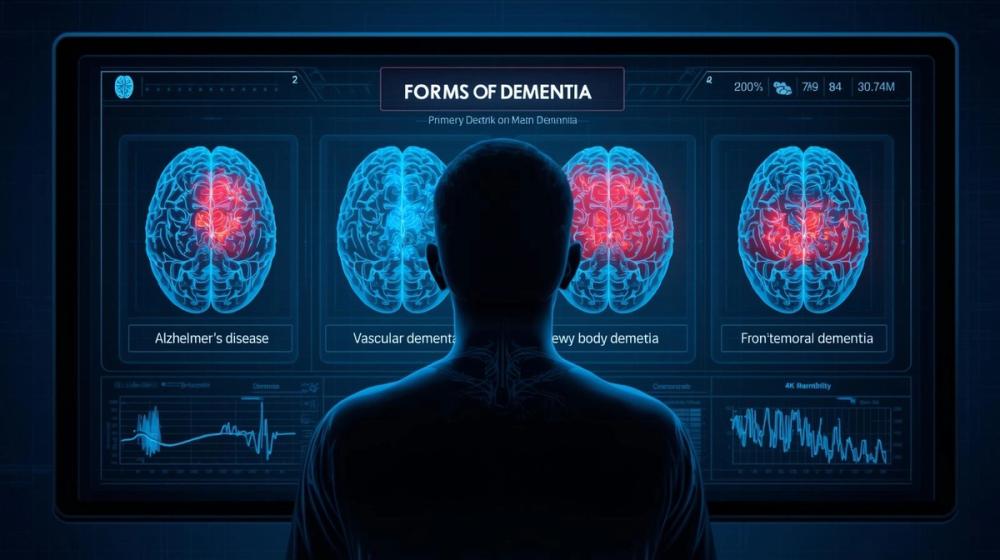
Alzheimer’s Disease
Alzheimer's disease is the most common form of dementia, accounting for approximately 60–70% of cases. It is characterized by the abnormal accumulation of beta-amyloid plaques and tau protein tangles in the brain.
These changes disrupt communication between neurons and eventually lead to cell death. The first symptoms usually include memory loss, difficulty finding words, and confusion about time or place.
Recent scientific advances suggest that inflammation and immune responses in the brain may play a larger role than previously thought. Researchers are exploring therapies targeting the immune system, metabolism, and even gut microbiota.
Vascular Dementia
Vascular dementia is the second most common form of dementia. It occurs when reduced blood flow damages brain tissue, often due to strokes or chronic vascular problems.
Unlike Alzheimer’s disease, symptoms may appear suddenly after a stroke or progress in a step-like pattern. People with vascular dementia may experience difficulties with planning, decision-making, and attention rather than memory alone.
Scientific progress in this field focuses on prevention. Controlling blood pressure, diabetes, and cholesterol has proven to significantly reduce risk. Advances in brain imaging are also improving early diagnosis.
Lewy Body Dementia
Lewy body dementia is associated with abnormal deposits of a protein called alpha-synuclein in the brain, known as Lewy bodies.
This form of dementia often causes fluctuating cognitive abilities, visual hallucinations, sleep disturbances, and movement symptoms similar to Parkinson’s disease.
Research is currently exploring how alpha-synuclein spreads between brain cells and how this process might be slowed. Scientists are also investigating therapies that target protein misfolding, a common feature in several neurodegenerative diseases.
Frontotemporal Dementia
Frontotemporal dementia primarily affects the frontal and temporal lobes of the brain, which regulate personality, behavior, and language.
Unlike Alzheimer’s disease, frontotemporal dementia often appears earlier, sometimes between the ages of 45 and 65. Behavioral changes, loss of empathy, impulsivity, and language difficulties are common early symptoms.
Genetic research has significantly advanced our understanding of this condition. Mutations in genes such as C9orf72, MAPT, and GRN have been identified in familial cases, opening new paths for targeted therapies.
Mixed Dementia
Many people actually develop more than one type of dementia. Mixed dementia commonly involves a combination of Alzheimer’s pathology and vascular damage.
As brain imaging and biomarker technologies improve, researchers are discovering that mixed forms may be more common than previously believed. This insight is reshaping how clinicians diagnose and treat cognitive decline.
Scientific Progress and Future Directions
The scientific understanding of dementia has evolved rapidly.
Advances in biomarkers, neuroimaging, artificial intelligence, and genetics are transforming diagnosis and treatment research.
International initiatives led by organizations such as the Alzheimer's Association and the National Institute on Aging are supporting global collaborations aimed at discovering disease-modifying therapies.
At the same time, researchers are increasingly focusing on prevention strategies, including lifestyle interventions, cardiovascular health, cognitive stimulation, and social engagement.
While there is still no cure for most dementias, scientific progress is accelerating, and understanding these diseases is a crucial step toward better care and future breakthroughs.
Conclusion
Dementia encompasses a complex group of brain disorders, each with distinct biological causes and clinical manifestations. From Alzheimer’s disease to vascular dementia and frontotemporal disorders, scientific research continues to reveal new insights into how these diseases develop and how they might eventually be prevented or treated.
Understanding the different types of dementia can help individuals seek earlier diagnosis, access better support, and stay informed about the rapidly evolving landscape of dementia research.
Share and sign up for our bi-weekly newsletter, featuring important resources and information for caregivers of individuals with dementia and mild cognitive impairment. MCI and Beyond’s mission is to inform caregivers, families, and patients that knowledge is a powerful tool.
References
- World Health Organization. Dementia Fact Sheet.
- Alzheimer's Association. 2024 Alzheimer’s Disease Facts and Figures.
- National Institute on Aging. Types of Dementia and Research Advances.
- National Institutes of Health. Neurodegenerative disease research updates.
#DementiaResearch #AlzheimersAwareness #BrainHealth #CognitiveDecline #Neuroscience #DementiaCare #Neurodegeneration #HealthyAging #MemoryCare #MCIBeyond
Sign up for our newsletter!
Get the latest information and inspirational stories for caregivers, delivered directly to your inbox.
