Updated on July 27, 2026
Editor: Marco Aurélio Gomes Veado

What Dementia Care Looks Like in Poor Communities
Marco Aurélio Gomes Veado
3 min read
•
April 23, 2026
Listen to audio version of this article
0:00
0:00
A cruel truth everyone has to face: Dementia does not affect everyone equally.
While it touches millions of families across the world, the experience of living with or caring for someone with dementia is dramatically shaped by economic reality. In poor and low-resource communities, the gap between what is needed and what is available can be devastating.
Resource deprivation may increase dementia risk due to reduced educational and professional attainment, and improving opportunities across the lifetime for disadvantaged individuals should be a public health priority for dementia prevention.
We at MCI and Beyond would like to discuss dementia care, particularly when resources are scarce, and why this conversation can no longer wait.
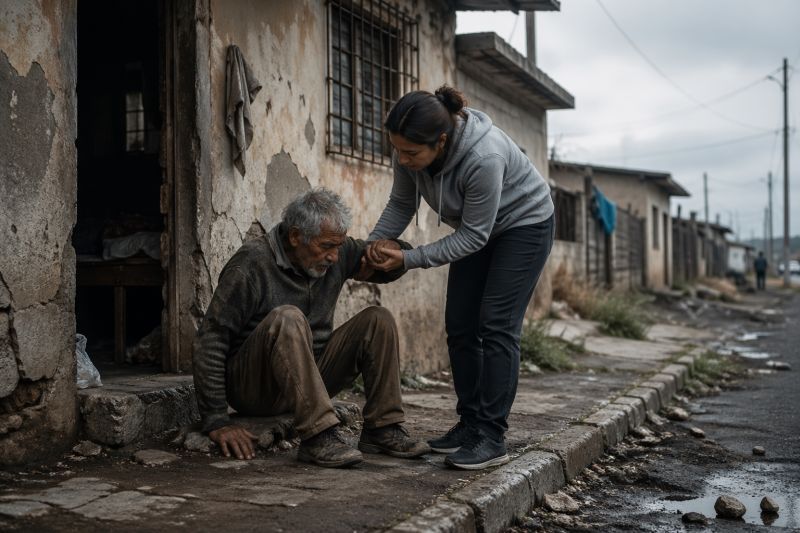
Fewer Resources, Greater Burden
In low-income urban and rural settings, the healthcare landscape for dementia patients often looks radically different from what wealthier communities take for granted.
Across low-resource communities, health resources tend to be limited, people living with dementia are predominantly socioeconomically disadvantaged, and they have few personal financial resources to contribute to care provision.
Specialized memory care facilities, already flawed in many ways, are even further out of reach.
Counties with dementia care options had significantly higher median incomes and lower poverty rates, suggesting a stark mismatch between need and availability for low-income and racial or ethnic minority older adults.
Hence, the workforce crisis makes things worse. Dementia care staff shortages are a national and global problem.
When Family Becomes the Only Safety Net
In the absence of formal care, families, and particularly women, absorb the full weight of caregiving.
This is not a choice made freely; it is a necessity born of systemic neglect.
Caregivers in poor communities often work multiple jobs, have no respite care options, and manage complex behavioral symptoms of dementia without any professional training or support.
Individuals with lower levels of education were significantly more likely to go without formal care, and individuals living alone often had little to no informal support, leaving them especially vulnerable.
The Global Picture: LMICs Left Behind
The divide is even more pronounced when we look beyond wealthy nations.
In so-called “low- and middle-income countries (LMICs”, dementia presents unique challenges due to the complexity of its diagnosis and management, compounded by limited resources within health systems, fragmented services, and inadequate social protection.
Crucially, in Latin American countries, potentially modifiable risk factors explain around 54% of dementia cases, where social and economic inequalities further exacerbate these risks. This means that a significant portion of dementia burden in poorer regions is, in theory, preventable if, of course, the political will and resources existed to address it.
What Needs to Change
Equity in dementia care is not a luxury: it is a matter of dignity and human rights.
At MCI and Beyond, we believe that every person living with dementia deserves compassionate, informed, and accessible care, regardless of their zip code or income.
Here is what must happen (our mission, by the way):
- Invest in community-based care models adapted to low-resource settings, including paramedicine partnerships and local training programs.
- Train family caregivers with free, accessible tools and emotional support systems.
- Address social determinants of health, such as education, housing, and nutrition, that directly shape dementia risk.
- Center equity in policy so that dementia research and funding reach the communities with the greatest need, not just the greatest purchasing power.
Addressing dementia care gaps requires significant financial investment to improve access to care, increase staffing of professional caregivers, and provide greater support to informal caregivers worldwide.
Conclusion
Dementia care in poor communities is often invisible, improvised in the back bedrooms of crowded homes, managed without diagnosis, carried in silence. Bringing this reality into the light is the first step toward changing it.
Let’s not forget those people who live in the streets, who are in jail, and so on (the forgotten ones), who have dementia. For that matter, read our other article: “Left Behind: Why Dementia Care Systems Fail the Poor and Vulnerable”.
At MCI and Beyond, we stand with every caregiver and every person with dementia, no matter their resources because the brain and the dignity of those who live within it know no economic class.
Whether or not you are a caregiver, just embrace this cause because dementia care inequality matters. Do your part. After all, “There are only four kinds of people in this world: those who have been caregivers; those who currently are caregivers; those who will be caregivers; and those who will need caregivers.” (Rosalynn Carter)
Join our biweekly newsletter for caregiver-friendly insights on dementia care, research, and health equity. Let's fight dementia together.
References
- Holmes, S., & Corazzini, K. (2023). Providing Dementia Care Across Low-Resource Communities. Innovation in Aging. https://doi.org/10.1093/geroni/igad104.1897
- Yale School of Public Health. (2025). One in Five People with Dementia Receive No Care, Global Study Finds. https://ysph.yale.edu
- Rataj, A., & McConnell, E. (2024). Advancing Data Collection for Person-Centered Dementia Care in Low-Resource Settings. Innovation in Aging. https://doi.org/10.1093/geroni/igae098.0569
- Daly, T. (2025). The Deprivation Cascade Hypothesis of Dementia. American Health Research. https://doi.org/10.1016/j.ahr.2024.100219
- Miranda, J.J. et al. (2025). Rethinking Health Systems for Dementia Care in LMICs. PLOS Global Public Health. https://doi.org/10.1371/journal.pgph.0005419
- Ahuja, R., & Levy, C. (2021). Better Brain Health through Equity: Addressing Health and Economic Disparities in Dementia. Innovation in Aging. https://doi.org/10.1093/geroni/igab046.3567
- Alzheimer's Association. (2024). Alzheimer's Disease Facts and Figures.
#MCIandBeyond #DementiaCare #HealthEquity #AlzheimersAwareness #DementiaCareMatters #CognitiveHealth #BrainHealth #CaregiversSupport #MildCognitiveImpairment #DementiaAwareness #MemoryCare #SocialDeterminantsOfHealth #DementiaSupport #LowIncomeCommunities #HealthJustice
Sign up for our newsletter!
Get the latest information and inspirational stories for caregivers, delivered directly to your inbox.
