Updated on July 27, 2026
Editor: Marco Aurélio Gomes Veado

LATE Dementia: The Hidden Alzheimer’s Mimic
Marco Aurélio Gomes Veado
3 min read
•
December 11, 2025
For decades, Alzheimer’s disease has dominated discussions around dementia and cognitive decline. However, a growing body of research reveals an increasingly recognized condition: it’s the LATE Dementia (Limbic-predominant Age-related TDP-43 Encephalopathy), a new cognitive decline that mimics Alzheimer’s yet follows a distinct pathology and progression.
The latest report from DongA Science highlights why LATE deserves more attention from clinicians, caregivers, and the cognitive health community engaged with MCI and Beyond.
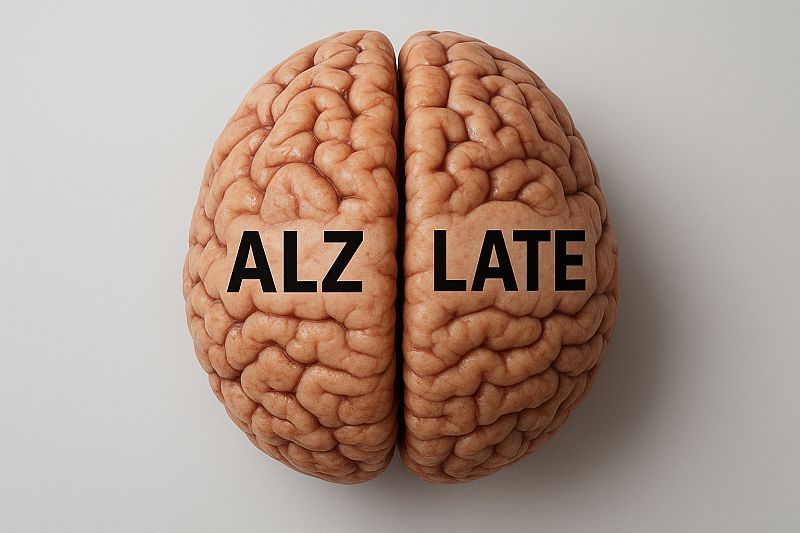
Is LATE Dementia a New Perspective on Memory Loss?
LATE Dementia presents cognitive symptoms that are strikingly similar to Alzheimer’s, especially memory decline. But its biological basis differs fundamentally.
While Alzheimer’s primarily involves abnormal build-up of amyloid and tau proteins in the brain, LATE’s core pathology relates to TDP-43 proteinopathy, an abnormal accumulation of the TDP-43 protein in limbic brain regions. (MCI and Beyond’s post)
This distinction has major implications
Because symptoms overlap significantly, many older adults diagnosed with Alzheimer’s may actually have LATE or even both conditions together, leading to potential misdiagnosis and suboptimal treatment.
Prevalence and Aging: Why LATE Matters for 'MCI and Beyond'
LATE is not rare; the condition has been estimated to affect about one-third of people over age 85 and around 10% of those over age 65. Given the rapidly aging global population, this makes LATE a significant public health concern, particularly among older adults already experiencing Mild Cognitive Impairment (MCI).
At MCI and Beyond, empowering readers with accurate and timely information about transitional cognitive stages is essential.
Many individuals with MCI may wonder: “Is this early Alzheimer’s, or something different?” Understanding LATE as another possible pathway, as highlighted by the DongA Science coverage, helps refine expectations and care strategies for families and clinicians alike.
After all, how does LATE differ from Alzheimer’s Disease?
Below is a quick breakdown of key differences between Alzheimer’s and LATE:
Alzheimer’s Disease:
- Dominant protein markers are beta-amyloid and tau.
- Often impacts memory, planning, behavior, and judgment.
- Many current dementia drugs target amyloid build-up.
LATE Dementia:
- Caused by TDP-43 protein buildup in the limbic system, which is a brain region essential for memory.
- Symptoms primarily involve memory loss and progress more slowly.
- It is frequently misdiagnosed as Alzheimer’s due to clinical similarity. (Wikipedia)
Because treatments developed for Alzheimer’s (targeting amyloid) may not address the TDP-43 pathology, misdiagnosis can lead to ineffective care approaches and confusion for patients and caregivers alike.
Implications for Early Detection and Care
For the MCI and Beyond community, early and accurate diagnosis is critical. Knowing whether cognitive symptoms stem from Alzheimer’s pathology, LATE, or a combination of both can influence decisions around:
- Lifestyle interventions
- Clinical monitoring and prognosis
- Caregiver planning and support
- Participation in research or clinical trials
While standardized clinical biomarkers for LATE are still under development, increased awareness among clinicians can improve differential diagnosis and personalized care strategies.
Why Research and Awareness Are Key
The fact that LATE often co-occurs with Alzheimer’s, and when present together can lead to more rapid cognitive decline, further underscores its importance.
So, as research expands, we’ll likely see:
- More refined diagnostic tools
- Greater understanding of how LATE intersects with Alzheimer’s and other dementias
- Potential novel therapeutic strategies beyond traditional amyloid-targeted drugs
Learning about LATE is especially relevant for caregivers of older adults with MCI who need skills, resources, and realistic expectations to navigate cognitive health challenges.
Conclusion
Thus, if you or a loved one is managing cognitive decline, always share information with your clinician about symptom onset and progression. Also, explore cognitive health evaluations that address multiple dementia types.
It’s important, though, to stay updated via trusted resources such as MCI and Beyond and related scientific releases.
Join our MCI and Beyond biweekly newsletter for caregiver-friendly insights on dementia treatments and care strategies. Share this important message. The link is in the Bio.
#LATE #Alzheimers #Dementia #CognitiveHealth #MCIandbeyond #BrainHealth #Aging #MemoryCare #Neurodegeneration
Sign up for our newsletter!
Get the latest information and inspirational stories for caregivers, delivered directly to your inbox.
